Blog
Do Museums Chase Hype or Serve Art?
Using smells in a museum absolutely makes sense — if the artist originally intended it as part of the experience. In that case, it’s not just justified. It’s essential. But truth be told, that’s a rare case. Most of the time, scent-based installations are simply a strategy to grab attention or re-engage an audience.
In natural history museums like Musée National de la Marine, recreating the smell of an oil spill can be both educational and contextually appropriate. But linking freshly invented perfume scents to the Éternel Mucha show at the Grand Palais Immersif — well, that’s at least somewhat understandable, given the museum’s focus on modern formats and immersive experiences. But seeing the same approach at Nice’s Musée National Marc Chagall? That’s… surprising, to say the least. One wouldn’t really expect it in a museum so deeply rooted in timeless artistic legacy.
Let’s be honest: this has little to do with artistic or historical value and everything to do with chasing attention. It’s not so different from launching a museum in the world of Roblox. Great for promotion, perhaps. But what does it actually bring to art?
Meanwhile, there are countless people who would give anything just to stand quietly in front of Chagall masterpieces but can’t, whether due to physical or financial limitations.
Wouldn’t it make far more sense to use the resources to fulfill that dream — the personal, lifelong dream of being close to true art, if only in virtual reality? Rather than investing in the next novelty trick just to stir up hype?
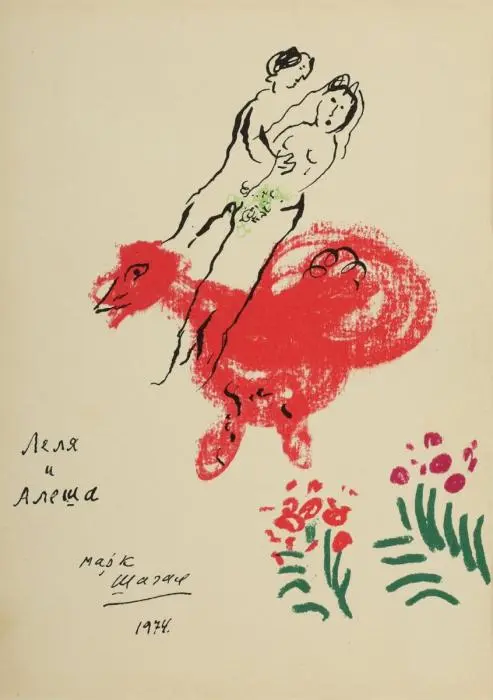
“Lelya and Alyosha” by Marc Chagall
Colored lithograph. 20.6 x 15.2 cm. 1974
From the collection of the MalovMeta.Art Virtual Museum