Blog
Making Museums Accessible for Everyone
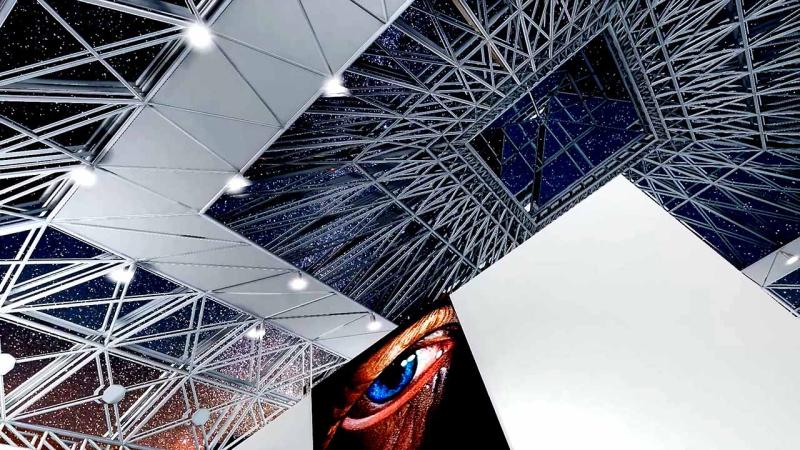
Pedro Ortega: What was the main idea behind the creation of META(art), and what solution does it bring to the world of digital art?
Dmitry Vatulin: The core idea behind the META(art) platform is simple: to allow as many people as possible to see as many works of art as possible in 3D — not as photographs taken by a photographer or as video footage filtered through a director’s vision, but as they indeed are.
When it comes to sculptures or architectural monuments, the ability to present them as 100% accurate, photorealistic 3D digital twins is a game-changer. However, even paintings take on a new dimension in a virtual 3D space — allowing visitors to appreciate ornate frames, the texture of brushstrokes, shimmering metallic paints, and gold leaf on icons as never before.
Another key factor is perception. When we look at an image of the Sagrada Familia, we’re not actually seeing the basilica itself — we’re looking at a photograph or video filtered through the photographer’s or videographer’s artistic choices. Even if they are very talented, their work inevitably introduces an interpretation. META(art) removes this filter, enabling the viewer to experience the artwork directly, without intermediaries.
Certainly, VR headsets would provide the most immersive way to experience art. That’s why META(art) automatically generates a VR version of the museum alongside the browser version, with no extra effort or cost. However, VR headsets remain expensive and uncomfortable: even among tech enthusiasts on the Steam gaming platform, fewer than 1.5% own a VR headset (as of February 2025). Among the general audience, this number is even lower. One day, when lightweight, comfortable VR glasses become the norm, META(art) users will seamlessly transition to an even more immersive experience. But for now, the best way to make art universally accessible is through the standard web browser that everyone already has.
PO: How would you define the concept of a «barrier-free artistic experience,» and what challenges have you encountered in implementing it? What engine powers META(art)?
DV: A barrier-free artistic experience isn’t just about convenience — it’s a fundamental step toward making culture accessible to people with limited mobility, elderly visitors, and anyone unable to visit a museum physically. We are proud that META(art) helps remove these barriers, transforming traditional websites from simple online archives with images into fully interactive cultural spaces.
Today, every museum and gallery has a website, but these sites serve primarily as encyclopedic resources. They provide facts and images of paintings and sculptures, yet they fail to capture the most critical aspect — the emotions and sense of awe that visitors experience when standing before a masterpiece in a real museum. META(art) eliminates this gap between physical and digital spaces. Visitors don’t just read about art in The Grove Dictionary of Art — they literally walk through galleries, study every detail of artworks, and explore the hidden corners of architectural landmarks. META(art) is not a reference book but a place for meaningful cultural engagement.
Most importantly, everything works in the most accessible way — right in a standard web browser on any device, from a TV to a smartphone. No apps, no expensive equipment, no complicated setup. Experiencing art without barriers is as simple as clicking a link.
One of the biggest challenges in creating the platform was replicating the sensation of physically moving through museum halls — without turning navigation into the equivalent of piloting an aircraft with hundreds of buttons and levers. We spent two years testing dozens of interface models before finding the one that provides a natural, comfortable experience.
Sure, these issues barely exist in VR — virtual reality itself provides a deep sense of immersion. However, as mentioned earlier, VR remains a niche technology with a limited user base. Today, browsers are still the best tool for making museums truly barrier-free — accessible on any device, familiar, intuitive, and requiring no additional cost from users.
PO: What advantages does META(art) offer compared to other digital art exhibition platforms?
DV: META(art)’s most significant advantage over other digital exhibition platforms is its exceptional accuracy and photorealism in reproducing 3D objects — whether sculptures, architectural structures, or ornate frames. Most competing platforms rely on WebGL/WebGPU technologies, meaning that rendering happens on the user’s device — whether a smartphone or laptop. This fundamentally limits the quality of graphics, model complexity, and level of detail they can achieve. In contrast, META(art) leverages high-performance graphics servers in data centers, allowing it to reproduce even the most intricate works of art with flawless realism.
Another key distinction is virtual exhibition halls. Many platforms can only place digital paintings on virtual walls in nearly identical and uninspiring rooms. Few can create fully immersive 3D environments, whether highly detailed reconstructions of real museums or entirely new, imaginative exhibition spaces. META(art) doesn’t just display art — it carefully recreates the surrounding atmosphere, ensuring that every exhibition space enhances the viewer’s experience.
Additionally, some platforms rely on 360° panoramas to capture existing museum spaces. While these can provide a faithful snapshot of a location, they remain static images — users cannot freely explore the halls, interact with artworks, or examine 3D objects from different angles. These solutions function as interactive photo albums rather than immersive museum experiences. We return to the same fundamental question: there is information about a work of art. Then, there is the emotion of experiencing that artwork, the deep connection, and the impact it creates. These are two completely different things.
Beyond photorealistic rendering, META(art) offers multiple additional benefits: intuitive navigation, near-instant loading times, AI-powered photorealistic guides, multi-language support, NFT integration, and SEO optimization for the Google search engine. But ultimately, the most important thing is that META(art) allows people to experience the magic of being inside a museum — from anywhere in the world. Perhaps this is the perfect moment to recall our motto: «We don’t replicate artworks, we make them timeless.»
PO: What 3D digitization system do you use to create exact replicas of artworks? How is META(art) optimized for mobile devices and areas with low connectivity?
DV: To answer this question fully, it’s essential to dive into the technical foundation of our platform. META(art) employs advanced interactive 3D streaming, a technology that shifts all computationally intensive rendering processes to high-performance servers in data centers. Instead of processing graphics locally, the user’s device receives a real-time video stream of the digital museum, much like how YouTube delivers videos. User interactions — such as rotating, zooming, or navigating through exhibition halls — are sent as simple commands to the cloud, instantly processed and reflected back on the screen.
This cloud-based approach ensures that META(art) runs smoothly on any device with a standard web browser, whether a smartphone, tablet, laptop, or even a smart TV. Unlike conventional 3D rendering solutions, which depend on a device’s internal hardware, our platform is not limited by the performance of the user’s phone or computer.
For optimal performance, META(art) requires only 6-8 Mbps bandwidth, making it accessible even in remote locations where mobile data is the only option. Of course, there are places where even this minimal bandwidth is unavailable. However, in such cases, users likely face more pressing concerns than exploring the masterpieces of ancient artists.
High-performance cloud servers generate photorealistic imagery in real time, allowing users to experience seamless interaction with 3D digital twins of artworks. Every movement and action is processed instantly, ensuring a smooth, immersive experience with no delays.
Our platform’s core is Unreal Engine by Epic Games, the industry-leading real-time rendering engine known for its unmatched 3D visualization and photorealism capabilities. However, even the most powerful game engine is only as good as the assets it works with. To accurately replicate artworks, we create highly detailed 3D models of sculptures, monuments, porcelain, and even paintings.
Yes, even paintings benefit from 3D digitization. Certain artistic elements — such as the texture of brushstrokes, the roughness of the canvas, metallic pigments, or gold — are integral to how a piece is perceived. A flat photograph cannot convey these details, but a true-to-life 3D model allows viewers to appreciate them as if they were standing in front of the original piece.
To create these ultra-precise digital twins, we use a combination of photogrammetry, manual 3D scanning, terrestrial laser scanning, and aerial photogrammetry, depending on the object’s characteristics. These raw data sets are processed and refined to achieve museum-grade accuracy using RealityCapture, Blender, 3ds Max, Substance Painter, Photoshop, and other software.
While AI-based tools for 3D modeling are rapidly evolving, the role of experienced 3D artists remains irreplaceable. Every texture, material, and fine detail must be meticulously verified to prevent distortions or inaccuracies. Unlike typical 3D assets in gaming or animation, cultural heritage preservation demands an absolute commitment to authenticity. Our mission is not just to create 3D models, but to faithfully preserve and present artworks in their full, original beauty.
PO: How do you ensure accessibility for people with disabilities on the platform?
DV: First and foremost, META(art) itself fundamentally enhances accessibility to cultural spaces for people with limited mobility. Since the COVID-19 pandemic, it has become clear that museums and galleries must expand engagement opportunities for those unable to visit in person. However, most existing solutions focus solely on providing information — texts, images, or videos — which, while often extensive, cannot replicate the experience of being in a museum.
META(art) transforms this approach by offering not just data, but immersive experiences. People with disabilities can explore entire museum spaces, walk through exhibition halls, examine artifacts in stunning detail, and even ‘hold’ priceless artworks that, in a real museum, are usually kept behind barriers or protective glass.
Most importantly, this level of accessibility is possible on any device using a standard browser — without the need for additional software or expensive equipment. While VR headsets offer a deeper level of immersion, they are often inconvenient, costly, and inaccessible to many users.
The platform also offers built-in accessibility features. Users with visual impairments can enlarge text and images using standard browser tools. Additionally, reading text is optional — visitors can press one large button, and an AI-powered virtual girl narrates the exhibition. The guide also answers any additional questions, whether asked by voice or typed. And, of course, she is just as knowledgeable about the museum’s collection as a real-life guide — after all, she learned from them and never forgets a thing! 
PO: How does the AI-powered virtual assistant work within your digital museum, and what type of interactions can it have with users? Do you use artificial intelligence in other processes of your platform?
DV: No museum is complete without a guide, and virtual museums on the META(art) platform are no exception. Our lifelike AI guides welcome visitors, lead them through exhibition halls, provide engaging explanations about artworks, and answer questions in real-time. Notably, our guides are multilingual — they can communicate not just in English or Spanish, but also in Chinese, Arabic, and virtually any other primary language.
At the core of our AI assistant is a large language model (LLM), which can be either a commercial solution (such as ChatGPT) or an open-source alternative (like Llama or Mistral). The process is straightforward: it is enough to upload collection data, and the AI automatically structures and adapts the content into a dynamic, conversational format. Additionally, flexible configuration tools allow museums to define presentation styles and response limitations, ensuring the guide delivers information in the desired tone and manner.
The AI guide speaks using Amazon Polly, a powerful Text-to-Speech (TTS) engine. However, like with LLMs, museums can integrate other TTS technologies, including open-source alternatives. To ensure a natural, human-like presence, the guides utilize Unreal Engine, which enables fluid animation, expressive gestures, and realistic facial movements, making interactions intuitive and engaging.
Beyond virtual guides, we explore AI in 3D digitization and optimization. However, for our specific needs, we are still in the testing and experimental phase. While AI-based modeling tools are rapidly evolving, we take a cautious approach, ensuring that nothing compromises the accuracy and integrity of the digital replicas. AI assists in specific aspects of 3D processing, but experienced 3D artists still handle the final refinement and quality control. That said, we eagerly anticipate the day when AI can take over more repetitive tasks, allowing artists to focus on complex and creative aspects of digital preservation.
PO: How can META(art) contribute to the preservation of cultural heritage, especially in cases of monuments at risk of disappearing?
DV: This is a particularly urgent and vital issue. While artworks in museum collections are generally well-protected, historical monuments and architectural structures are constantly at risk of deterioration due to time and environmental factors. Unlike artworks, which are concentrated in museums where proper care is relatively easy to provide, cultural heritage sites can be located in the most remote and inaccessible regions — sometimes at a vast distance from the nearest settlement. Preserving such monuments is not only technically challenging but also extremely expensive. Maintaining an architectural structure in good condition often requires significantly more resources than storing a painting or sculpture in a museum setting.
We realized the full scale of this challenge while working on the Sacred Geography of Kazakhstan project. Kazakhstan is an enormous country; most of the 135 historical and architectural landmarks included in the program are located in hard-to-reach areas. Many of these monuments are in a critical state, and restoring them would require immense financial investment. In cases like these, creating digital twins is not just a convenient solution — it is often the only way to preserve these monuments for future generations.
However, the goal is not just to create digital copies of heritage sites but also to raise awareness and spark public interest. Reaching many of these sites in person is difficult and costly, and simple photographs of ruins often fail to capture attention. But offering a virtual walk through an ancient temple, an exploration of its underground chambers, or a close-up view of its centuries-old frescoes? That captivates people. Especially when we can present not only the site’s current state but also a reconstruction of how it once looked — restoring facades and interiors based on historical documents (when such records exist, of course).
So, with this approach, we achieve two key goals:
- Cultural heritage is preserved in digital form for future generations.
- It becomes more accessible and engaging for a broader audience today.
PO: What role do NFTs play in the platform, and how do they ensure the authenticity and security of digital artworks?
DV: On the META(art) platform, NFTs are used for their original intended purpose — as unique digital certificates of ownership. Contrary to popular belief, an NFT is not just an image but a verified proof of ownership over a specific digital or physical asset. In our case, it is proof of ownership of the digital twins of artworks digitized using the META(art) platform.
Each digital twin automatically receives an NFT certificate, requiring no human involvement. When an artwork is added to a digital collection, an NFT is generated, securing the ownership rights. A purchase link for the NFT is placed on the artwork’s page within the virtual museum.
Most importantly, this is not just an image stored on the blockchain. The NFT owner gains access to a high-resolution 3D model of the artwork. Using the NFT(art) application — developed for computers, smart TVs, and TV boxes — the rightful owner can view a 100% accurate, photorealistic replica of the artwork on their screen. This feature is especially valuable for sculptures, porcelain, and other three-dimensional objects, which can be rotated, zoomed in on, and examined from any angle.
Publicly visible NFT data only contains a preview image, while full 3D models are encrypted. These high-quality models can only be accessed through the NFT(art) application and by the verified NFT owner, who must authenticate using their crypto wallet. This encryption ensures that our NFTs cannot be stolen (not to mention that every transaction is permanently recorded on the blockchain).
NFT owners can fully customize how their digital twins are displayed within their personal accounts on the museum’s website. They can arrange artworks in a preferred order, set display durations, choose whether to show paintings with or without frames, and adjust the rotation of 3D objects. NFT owners can also curate personalized playlists, creating their own digital art collections — all easily viewable on a smart TV or even any television with a simple Smart Box costing just a couple dozen euros.
Thus, on the META(art) platform, NFTs are not just a passing trend but a fully functional tool for authentication, protection, and monetization of digital art replicas.
PO: To conclude, a question I ask all my interviewees: do you think it would be viable to create a metaverse to travel around the world and discover cultural heritage treasures?
DV: I don’t think the question is about whether such a metaverse should exist (it undoubtedly should!), but rather when it will become a reality. I believe the key factor will be the development of lightweight, comfortable VR headsets. Once this technology reaches genuine user-friendliness, cultural institutions, museums, and even governments will move swiftly into the metaverse.
But there is no need to wait for that moment. Even today, including through platforms like META(art), we can create digital twins of cultural objects that are accessible not only through VR headsets but also on the screens of regular computers, tablets, and televisions. This is already transforming the lives of people with disabilities, older people, and anyone unable to travel and experience the world’s masterpieces in person right now.
And honestly, all of us involved in preserving cultural heritage should hurry to create our own corner of this metaverse. For many historical monuments, digital twins are often their last chance to survive — not only against time but also against human cruelty, ignorance, and indifference. Just look at the fate of Palmyra.
PO: Is there anything else you would like to add?
DV: First of all, I would like to sincerely thank you, Dr. Ventureira, for the opportunity to share our work. I deeply admire your academic and educational contributions. In our era of flags on Mars, Artificial Intelligence, and digital currencies, cultural heritage preservation too often takes a backseat. That makes your efforts to promote and study it all the more valuable.
I would be delighted to continue discussing digital museums, cultural heritage, and the future of technology. Feel free to reach out:
Thank you again for this interview!