Blog
Unlocking Museum Archives in the Digital Age
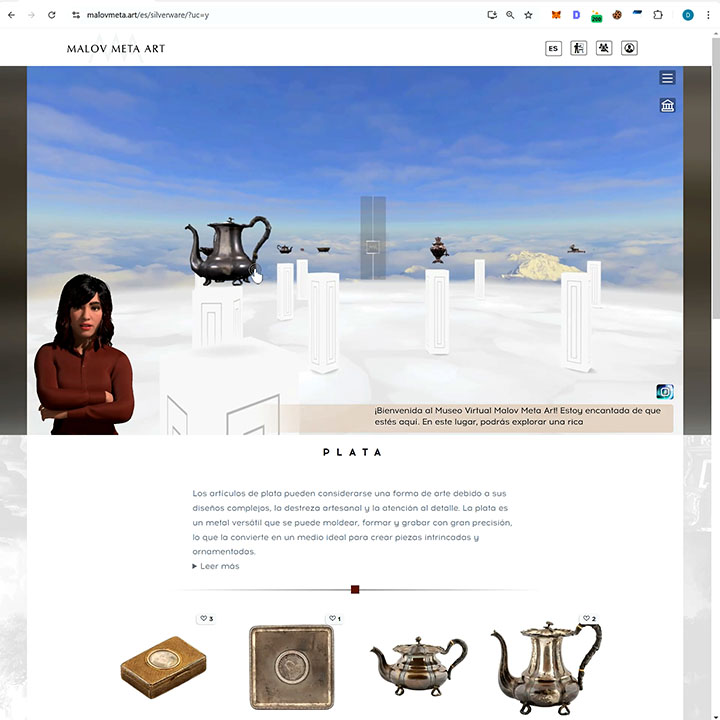
It’s no secret that most museum collections remain hidden. In major institutions like the Louvre or the British Museum, less than 5% of their vast collections are ever displayed.
Why?
- Limited exhibition space
- Strict preservation requirements
- Ongoing restoration work, etc.
To address this, museums create partially open storage areas or digital archives. The latter seems like the best solution — at least in theory.
But digital archives come with two major flaws:
🔹 Most archives consist only of flat images, not 3D models — creating photorealistic digital twins is expensive.
🔹 But the bigger problem isn’t just what’s missing — it’s how these archives look. They don’t feel like exhibitions at all. Instead of a carefully curated space, they resemble a sterile digital warehouse, overwhelming users with endless images and text, offering no sense of presence or engagement.
This creates a massive gap between traditional exhibitions — designed to evoke emotion, atmosphere, and storytelling—and digital archives, which often feel like cold encyclopedias rather than cultural experiences.
This is where META(art) makes a difference. Instead of browsing a lifeless database, visitors can walk through immersive virtual museum halls, exploring digital twins of stored artifacts as if they were part of a real exhibition.🚀
These once-hidden objects are no longer locked away in museum vaults. They become part of a seamless, engaging experience that restores emotion, storytelling, and presence to digital collections.
And beyond emotion, virtual galleries solve a practical issue — eliminating space constraints and allowing museums to showcase much more of their collections.😉
Try it yourself. Right in your browser. No extra apps needed. Online Demo